How to Increase Client Lifetime Value in Your Agency
Client lifetime value is the gross profit one client gives your agency across their whole time with you. Work it out as 1 divided by your monthly churn rate, multiplied by your monthly gross profit per client. You raise it by charging more, keeping clients for longer and selling them more or better services.
- Use lifetime gross profit rather than revenue: 1 divided by churn, multiplied by gross profit per client.
- You only need three numbers: revenue, cost of goods sold and monthly churn.
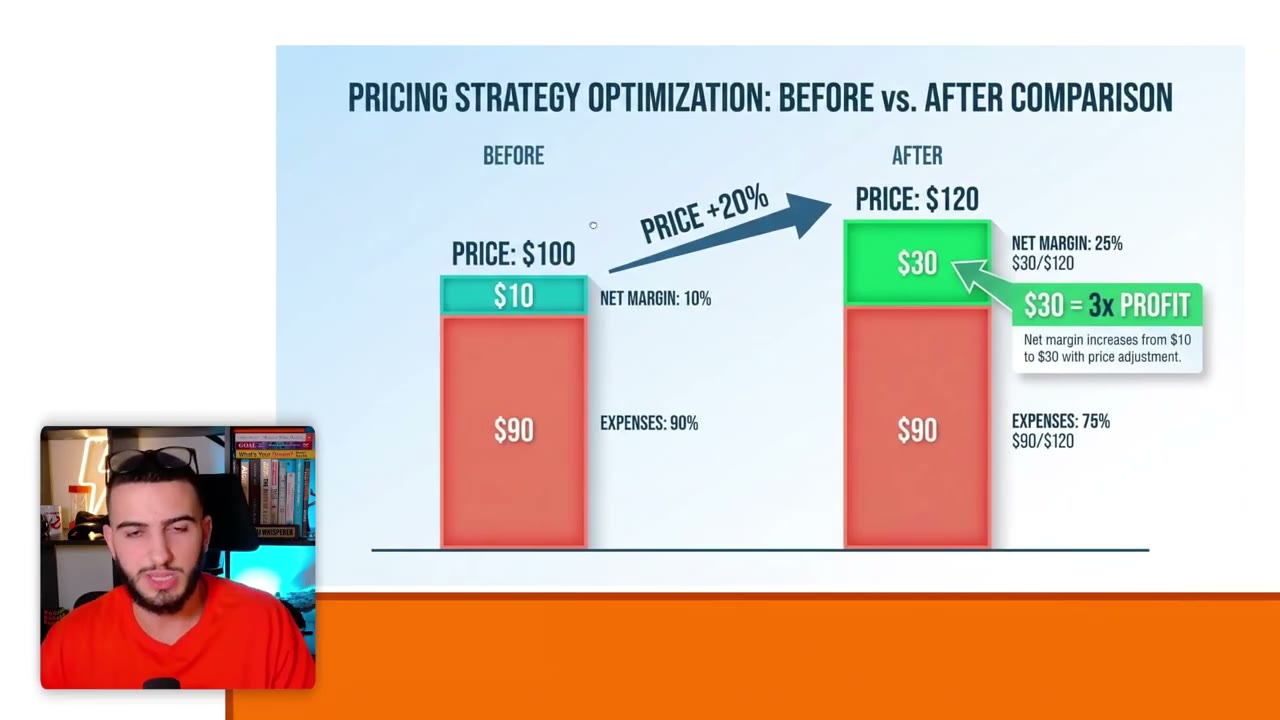
- A price rise adds almost pure profit, because the extra money carries no extra delivery cost.
- Lower churn lifts lifetime value because clients pay you for more months.
- Longer billing periods, extra campaigns, faster support and more calls are simple upsells.
- Measure lifetime value once, then check it monthly by cohort so you know your changes work.
What is client lifetime value for an agency?
Lifetime value, or LTV, is a number that shows how much one client is worth to your agency. There are two ways to measure it. The revenue version counts how much revenue one client pays you. The profit version counts how much gross profit each client gives you.
We recommend the profit version, usually called lifetime gross profit. A popular playbook on lifetime value makes the same distinction. Revenue can look healthy while very little of it is left after you pay to deliver the work.
This number matters beyond the back end of your business. When each client is worth more, you can spend more to win them. You can also spend more on giving them a better experience, which tends to keep them happier.
How to calculate lifetime gross profit
The formula is simple: lifetime gross profit equals 1 divided by churn, multiplied by gross profit. It tells you how much gross profit one client gives you over their entire lifespan with your agency.
- Find your revenue per client: the total income from selling your services before any expenses.
- Find your gross profit per client: revenue minus cost of goods sold, which is what it costs you to deliver for that client.
- Find your monthly churn: the percentage of your client base you lose every month.
- Divide 1 by your churn rate, then multiply the answer by your monthly gross profit.
A worked example of the formula
Say you charge 5,000 a month, lose 10% of clients each month, and it costs you 1,000 a month to deliver for each client. Your gross profit per client is 4,000.
Divide 1 by 0.1 and you get 10, the number of months a typical client stays. Multiply 10 by 4,000 and your lifetime gross profit is 40,000. This is an illustration of the method, not a benchmark.
If you already track churn and capacity, you have most of the inputs. Pause here and run the sum for your own agency before you change anything.
Lever one: raise your prices
The most direct way to lift lifetime gross profit is to charge more. Using the example above, moving from 5,000 to 6,000 a month lifts gross profit to 5,000 and adds 10,000 to lifetime value.
The effect can be bigger than the price change looks. Suppose you charge 100 and your net margin is 10%, so you keep 10. Raise the price by 20% to 120 and the extra 20 is pure profit, because it carries no extra cost unless you add services. Profit goes from 10 to 30, which is more than a 20% gain.
You do not need a dramatic jump. Even a small increase to a retainer or a sign on fee goes straight to profit. The goal is a price where churn stays relatively low and your lifetime value still climbs.
So test it. Try different price points and compare conversions, churn and lifetime value for each group of clients that signed at a given price. Once you find the right level, it becomes the new standard for your clients.
Lever two: keep clients paying for longer
For an agency, increasing the number of purchases mostly means lowering churn. In the formula, churn sits under the 1. The lower it is, the more months each client pays you, and the more your gross profit is multiplied.
There are many ways to cut churn, so focus on the highest leverage activities. We think about it like building a house: first prevention, which is the blueprints and foundations, then detection, which is going back to check the house is holding up. Two moves cover both.
Set up a strong onboarding process. Onboarding is the first impression a client has of you. Set clear expectations and get them a win as quickly as you can, such as their first lead, their ads going live or the final creative. Delays create buyer's remorse, and that eats away at trust. Map your onboarding process so nothing stalls.
Become proactive in delivery. Results matter, and clients remember a poor month more than a strong one. Once a week, review every client across their ad accounts, CRM pipelines and call software. Compare each one to its targets and grade it green, yellow or red. That gives your success team and media buyers a clear priority list, with the red clients getting the most attention.
Lever three: sell more and sell better
The third lever raises the gross profit side of the equation. Think of an upsell: getting the same client to buy more, or to buy a better version of what they already buy. There are two groups of examples.
To sell more of the same thing:
- Sell more months up front. Offer a quarterly, six month or annual package instead of billing month by month. You collect cash earlier, and a client on an annual package stays at least that long.
- Sell another campaign. If you normally set up one campaign, offer a second one with its own focus and extra marketing support.
- Bill weekly instead of monthly. Charging every 28 days gives you thirteen billing periods in a year instead of twelve. Package your offers in weeks, such as four weeks, eight weeks or twelve weeks.
Upsells that improve the service
To sell better, add paid upgrades to what the client already buys. A faster response time is one, for example a response within 12 hours instead of 48. More calls is another, such as a weekly call instead of a monthly one.
These upgrades also give you something to offer when a client wants to leave. Keep a menu of them. If a client complains about a specific thing, book an exit interview to understand what they want. If the complaint is slow responses, you can offer a trial of the faster response programme, then bill for it afterwards.
Used this way, upsells do two jobs. They raise gross profit, and they help keep clients, so they push both parts of the formula in the right direction.
How to track lifetime value over time
Measure your lifetime value once to set a baseline, then set a reminder to check it again a month later. A monthly check works well, because lifetime value takes time to reflect your changes. Look at it by cohort so you can see whether each change helped or hurt.
Without that feedback loop you can spend a month on something you believe is the answer, only to find it did nothing for lifetime value. Tracking the number also tends to motivate the team to improve it.
Questions people ask
What is the formula for client lifetime value?
Lifetime gross profit equals 1 divided by monthly churn, multiplied by gross profit per client per month. For example, 10% churn and 4,000 gross profit gives 10 multiplied by 4,000, which is 40,000.
Should I measure lifetime value with revenue or profit?
We recommend profit. The revenue version only shows what a client pays you, while lifetime gross profit shows what is left after the cost of delivering the service.
Why does a price increase affect lifetime value so much?
The extra money from a higher price carries no additional delivery cost unless you add services. It goes straight to profit, so the gain can be larger than the percentage you raised prices by.
How often should an agency track lifetime value?
Measure it once as a baseline, then check it monthly, ideally by cohort. Changes take time to show, so daily tracking is not needed.
Rather have it built for you?
Fluxomate builds internal tools and AI agents for agencies. On your stack, owned by you.
See if you qualify